

Practical AI for FMs
The AI field guide for facilities teams
Learn how to harness AI to enhance decision making, power space planning, and speed workflows for your entire team.
In this guide:
Get the AI-readiness checklist
Build shareable custom GPTs
Use Deep Research for strategic planning
Follow AI experts
Explore use cases for FMs
Expand your knowledge with these reads

Build a custom GPT for your team in minutes
Think of role-specific tasks that can streamline the workflow for you and your team. Feeling stuck? Get ideas from OpenAI's ChatGPT Use Cases for Work.
Start with a simple GPT and build complexity over time. Use OpenAI's Impact-Effort Matrix to identify which use case to begin with.
Include detailed instructions, conversation starters your team can use, and set rules and parameters.
Securely upload your documentation, including process docs, playbooks, and messaging docs.
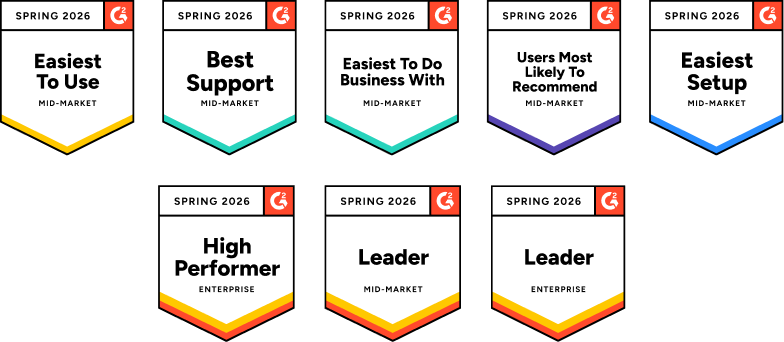
REVIEWS
Real talk from real users.
Read what other clients are saying on G2—the world's most trusted software marketplace.
BOOKMARK THESE LINKS
Top AI experts to follow
As recommended by Jeremy Schreiner, Data Engineer, OpenAI
Dr. Andrew Ng
Founder of DeepLearning.AI and co-founder of Coursera. Read his newsletter: Letters from Andrew Ng
Rohit Patel
Director at Meta's Superintelligence Labs. Read: Understanding LLMs from Scratch Using Middle School Math
Fidji Simo
CEO and Chair at Instacart, Board Member at OpenAI and Shopify. Read: AI as the Greatest Source of Empowerment for All
Top AI use cases for space planners + FMs
Use AI to forecast space demand, fine-tune layouts, and instantly simulate floor plans so every square foot supports productivity and collaboration.
Free up time by automating bookings, move planning, and repetitive tasks. AI handles the busywork so your team can focus on strategy.
AI connects siloed data to surface real-time insights, flag trends, and deliver reports that help you plan proactively—not reactively.
AI can suggest the best in-office days for teams, assign spaces based on work patterns, and ensure your workplace adapts to evolving needs.
Give employees their own workplace assistant: one that's ready to find spaces, answer questions, and personalize their experience on demand.

Your AI-readiness checklist
Most workplace data lives across disconnected systems, making it hard for even the smartest AI to perform. The checklist below will help you assess your AI readiness, align your data, and set the stage for meaningful results.

Where does your workplace data live? Look across systems like badge access, HR platforms, booking tools, sensors, and CAFM. Assess whether your data is accurate, recent, and structured and identify any gaps or silos that could slow down AI adoption.
Start small by finding the everyday processes that eat up your team’s time. Think desk and room bookings, move/add/change workflows, new hire seat assignments, or ticket routing. These are prime opportunities for AI to remove friction and free up your team.
Understand who owns what. From badge data to floor plans to HR systems, success with AI depends on partnerships. Map out who can grant access, provide context, and advocate for you across IT, HR, real estate, and finance.
You don’t need to launch company-wide on day one. Pilot a small, high-impact use case—like an AI Slack agent for move requests or a booking optimization tool—and use the results to build internal momentum.
Partner with solutions that understand your workplace ecosystem and offer AI-native capabilities. For example, OfficeSpace integrates with your existing tech stack and supports agentic workflows that make deployment easier.
Once your pilot is live, share what’s working and where you’re learning. AI initiatives are iterative by nature, and transparency helps bring more teams on board and uncover new opportunities for automation and insight.
Deep Research enables companies to stay ahead
ChatGPT’s Deep Research function goes beyond a typical web search and analyzes multiple sources for deeper insights, delivering digestible summaries. This is especially important for AI-first companies, allowing them to make informed workplace design decisions, adopt best hybrid workplace practices, and balance real estate resources and spend.
- What you're researching
- Format you want (e.g., executive summary, bullets, SWOT)
- Parameters (what to exclude)
- Who you are / why you need it
- Tip: Think like a researcher. Frame prompts as if you were briefing a research assistant—be specific about scope, audience, and purpose.
- Executive summary
- Cross-web analysis
- Key themes and strategic insights
"At OpenAI, we harness the power of artificial intelligence alongside OfficeSpace technology to drive our occupancy strategies and workplace experience. By leveraging AI, we can analyze real-time utilization patterns, predict future space demands, and uncover insights that traditional methods might overlook. OfficeSpace's dynamic platform enables us to visualize these data-driven insights, manage space allocations efficiently, and optimize seat assignments to support both individual productivity and team collaboration. This synergy allows us to create agile, purpose-driven environments where space evolves alongside the needs of our rapidly growing teams."
Zig Wu
Head, Strategic Occupancy Planning, OpenAI
What's generative AI?
Models that create original content based on prompts. In the workplace, it’s commonly used for generating documentation, crafting virtual tours, powering chatbots, and enhancing tenant or employee engagement through personalized content.
What's agentic AI?
AI agents can plan, take actions, and adapt over time to meet specific goals. These systems act on your behalf, automating tasks like scheduling, orchestrating workflows, or managing data without needing constant supervision.
"We like to say agentic AI is 'supercharging the superhumans' like you in every organization. It’s capable of independent research, work, planning, and execution. As it gets feedback, it adjusts its strategy." — Jeremy Schreiner, OpenAI
HOW IT WORKS
Your next read
RESOURCES
More from OfficeSpace
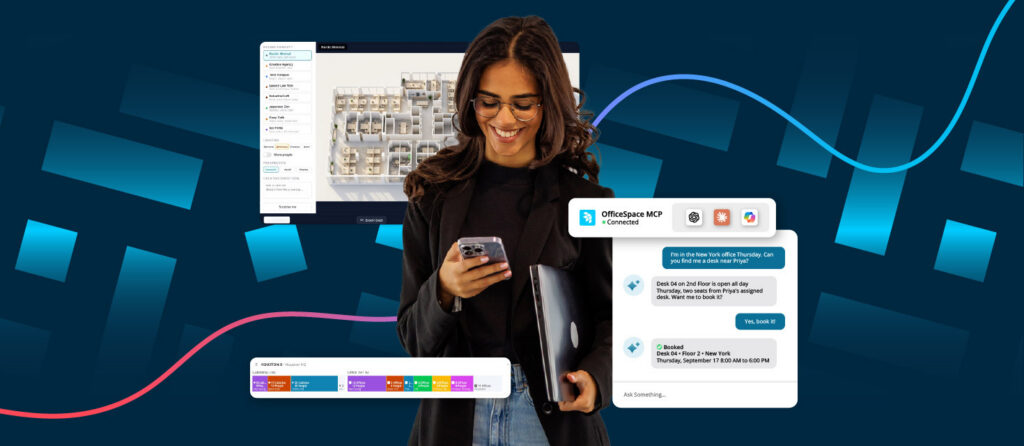



OfficeSpace is the AI workplace management platform teams use to plan smart spaces, coordinate in-office days, and make smarter real estate decisions faster.
© 2026 OfficeSpace Software Inc.