Key takeaways
-
AI has moved from a future concept to the current operating system of the hybrid workplace, enabling teams to manage complex distributed models
-
Industrial AI training acts as a workforce equalizer, allowing younger employees to access institutional knowledge and make complex decisions faster
-
AI bridges the generational gap by making the office more accessible through conversational interfaces and ensuring mentorship visibility
-
Tools like OfficeSpace’s AI Canvas allow FMs to instantly generate optimized layouts and predict portfolio needs, turning data into strategic action
In 2026, the narrative that AI exists solely to replace human labor has been dismantled by reality. The true crisis facing the global economy isn’t automation—it’s the potential loss of “tacit knowledge” as a generation of experts retires, leaving a gap that manual training cannot fill fast enough.
According to recent insights from Fortune, the mandate for 2026 is clear: we must train workers on AI to preserve institutional wisdom and build resilience. Kriti Sharma notes that AI is now acting as a “workforce equalizer,” demolishing barriers to entry for younger professionals by organizing fragmented data in minutes rather than months.
For workplace leaders and Facility Managers (FMs), this shift is profound. You are no longer just managing space; you are managing intelligence. Just like the industrial sector, the hybrid workplace is full of tradeoffs—cost vs. experience, consolidation vs. expansion. AI backstops human judgment, pulling together signals from sensors, leases, and badging data to help teams make confident calls in a complex, distributed environment.
This article explores how AI is shaping the hybrid model in 2026—not by putting the office on autopilot, but by empowering a new generation of leaders to navigate the built world with precision.
Typical uses of AI in the workplace
Just a few years ago, business leaders were speculating on how AI might compel businesses to rethink their operations. In 2026, those predictions have become standard practice. The “AI explosion” is no longer a future event; it is the current operating reality for high-performing organizations.
Innovators are no longer asking if AI will change work, but how to deploy it to solve specific industrial and workplace challenges:
- Breaking data silos: Instead of manual collation that takes weeks, AI now organizes fragmented datasets—from sensor readings to lease terms—in minutes. This allows teams to answer critical questions like “where is money being wasted?” instantly.
- The workforce equalizer: As noted by Fortune, AI is democratizing technical skills. It allows junior professionals to access the “tacit knowledge” of seasoned experts, enabling them to make complex decisions with confidence and closing the talent gap in technical roles.
- From taskmaster to copilot: AI has moved beyond simple automation to become a strategic partner. It backstops human judgment, helping FMs trade painstaking guesswork for decision intelligence, ensuring that neither human nor machine is left to operate in a vacuum.
How have remote work and the hybrid workspace evolved with AI?
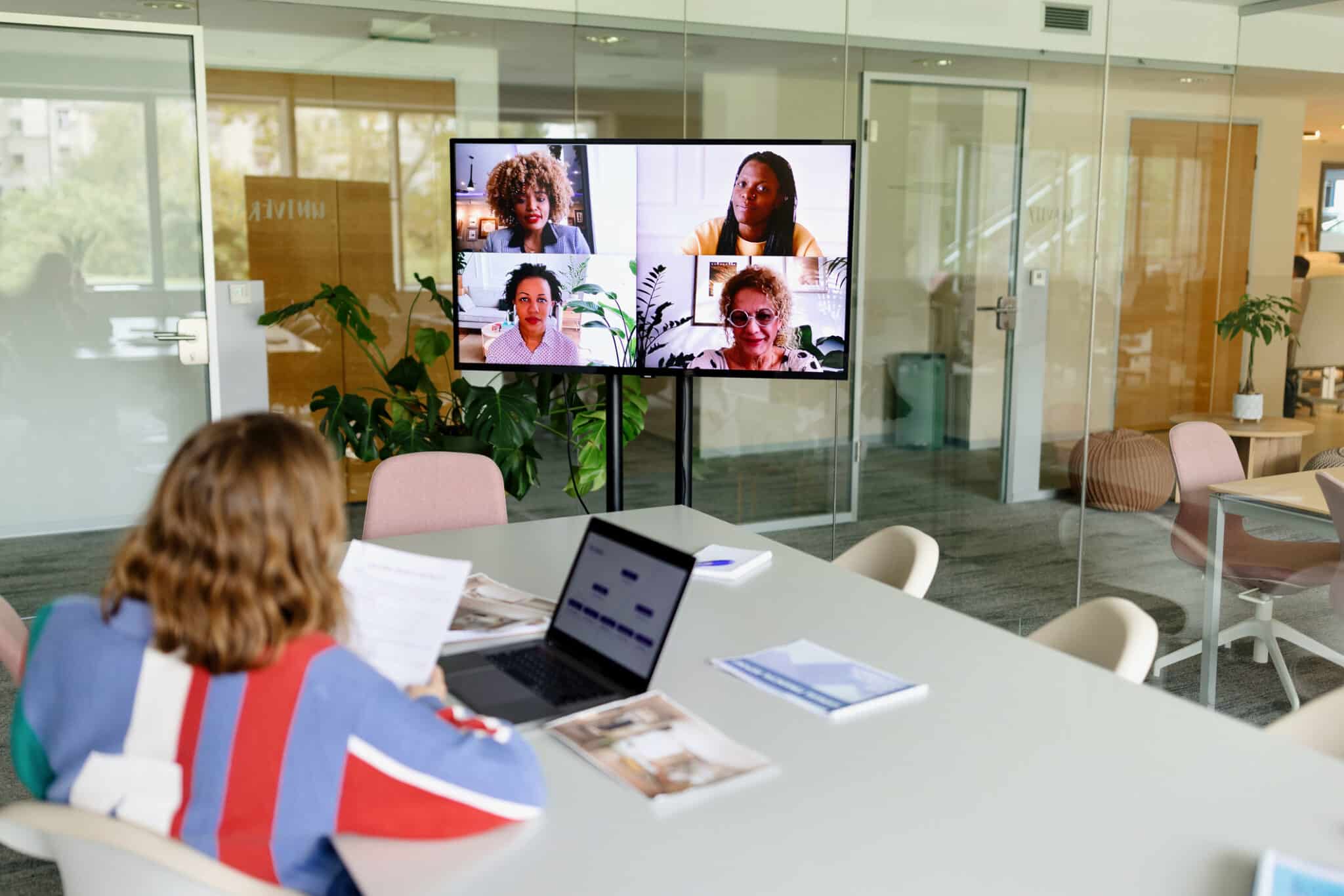
Not all of this is speculation. AI tools and other technological advances are, of course, already reshaping the frameworks of many companies at a time when the idea of what it means to work—and where exactly work takes place—has already transformed.
The new aesthetic
The office has evolved from a mandatory location to a deliberate destination. Employees choose to come in for specific purposes—brainstorming, strategic planning, and human connection. This shift has driven a permanent design evolution toward “touchdown spots,” hot desks, and flexible zones that can be reconfigured on the fly.
Unlike the static layouts of the past, these new spaces are continuously optimized. AI allows facility teams to see exactly which collaboration zones are popular and which are “dead space,” enabling a dynamic aesthetic that evolves alongside the workforce.
Want to learn more about AI insights in action? Check out this webinar with OSS leaders on AI space planning
Collaboration in the hybrid workplace
Company decision-makers are focused on creating office ecosystems that facilitate serendipitous connections. Leading organizations are carving out workplaces that include open nomad tables and digital collaboration zones to drive culture, ensuring that the office offers something the home office cannot.
Of course, arriving at how to foster the ideal workplace for employee well-being and office productivity has its challenges. Leaders grapple with how to use new data and predictive analytics in decision-making processes for the workplace. They weigh how to optimize corporate real estate without sacrificing employee experience.
Other challenges are more brass-tacks—but no less crucial: How many people are currently working in the office? What days of the week are most popular? How is space being utilized? What in-office attendance are companies expecting in 2026? Data collection and analysis is a big part of answering these questions—and that is something AI does well.
Hybrid workers: The Gen Xers, Gen Zers, and Millennials
Another motivation for the widespread adoption of hybrid models is the need to retain talent across all demographics. From Gen Z digital natives to experienced Baby Boomers, the desire for flexibility is universal, though the reasons vary.
In 2026, the conversation has moved beyond “who wants to come in” to “how do we make the office work for everyone?” This is where AI acts as the great equalizer.
Enhancing mentorship through visibility
For younger employees, the “power of proximity” is real—being in the same room as a mentor accelerates career growth. However, in a hybrid world, you can’t rely on luck to bump into leadership. AI-driven “Who’s In“ features solve this by allowing employees to see when their team or mentors will be on-site, enabling them to coordinate their schedules for maximum face-time.
The digital-first experience
Gen Z and younger Millennials expect their workplace technology to be as intuitive as their consumer apps. They hesitate to ask for help or navigate clunky legacy systems. An AI operating system like OfficeSpace removes this friction by offering conversational interfaces (like a Slack bot) to book rooms or find resources, making the physical office accessible without the need for training manuals.
Facilitating “enriching socialization”
Fully remote work can lead to a lack of soft skill development and spontaneous idea generation. By using AI to optimize social spaces and suggest optimal collaboration times, companies can curate the “water cooler” moments that drive culture, ensuring that time spent in the office is socially enriching, not just logistically convenient.
How OfficeSpace AI optimizes real estate and experience
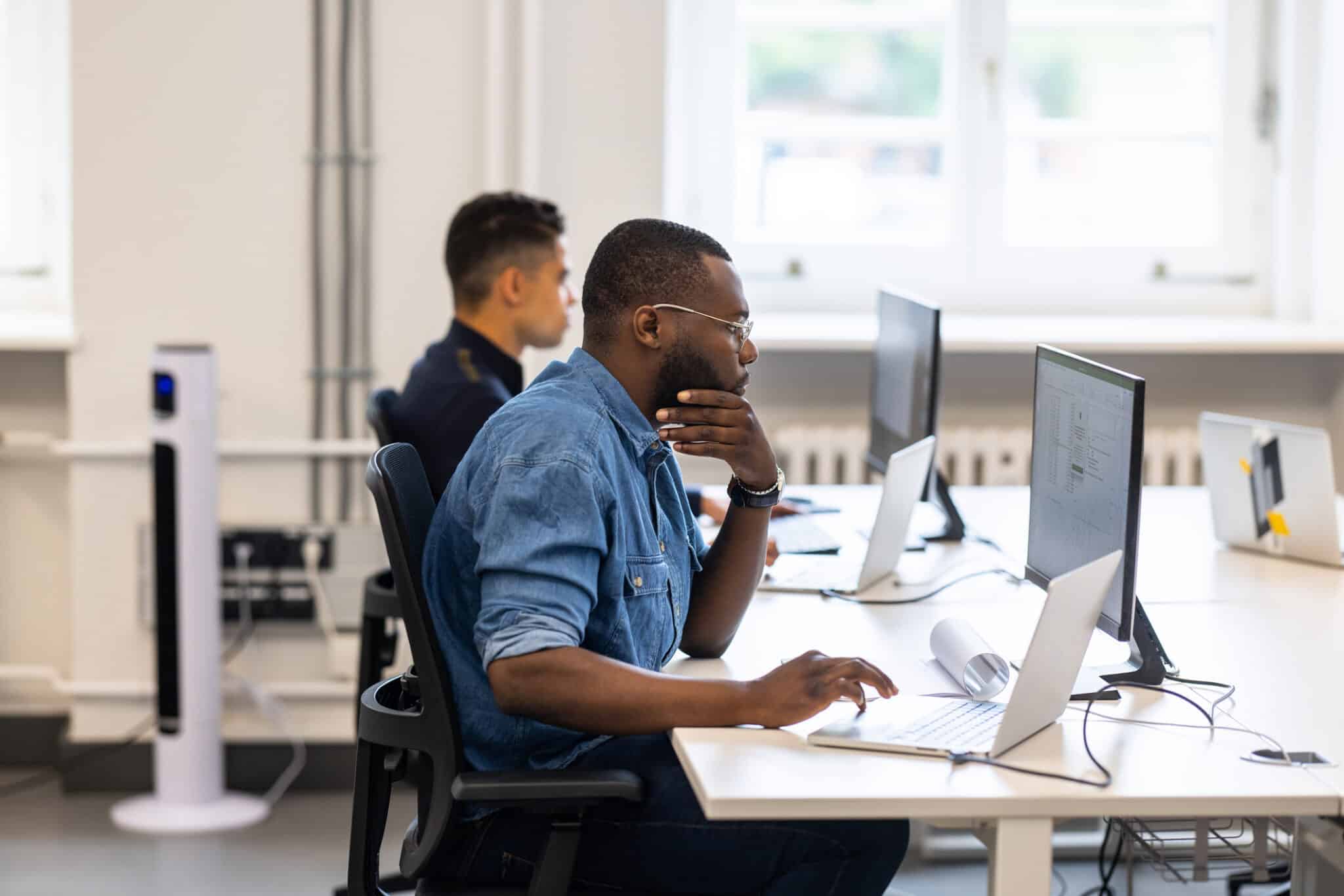
While the role of AI was once speculative, we have already deployed it as the operating system for the built world. By embedding Dojo AI technology directly into the platform, OfficeSpace transforms static facility management into a predictive, “living” system.
AI systems will continue to evolve to keep hybrid offices running efficiently, according to the U.S. chief products and technology officer of PwC.
“[AI-driven] concierge tools will book conference rooms, optimize the location of colleagues in the office so they can better collaborate, and help office managers manage capacity and services.” Managing capacity is a big part of negotiating the hybrid workspace—one that some worry could result in inefficient, empty spaces in office buildings. “Businesses just can’t afford to have swaths of real estate that are underutilized for the week,”
From data collection to strategic intelligence
At the heart of optimization is data. OfficeSpace aggregates millions of signals—from badge swipes and Wi-Fi logins to IoT sensor readings—to build a complete picture of utilization. But it doesn’t just collect this data; it uses predictive analytics to forecast demand.
Instead of guessing how much space you need, the AI analyzes historical patterns to answer complex questions:
- Right-sizing: “Do we have too much space on Mondays but not enough on Thursdays?”
- Portfolio strategy: “Can we consolidate two floors without impacting employee experience?”
- Usage behaviors: “Which teams actually collaborate, and should they be seated adjacently?”
Design your workplace with artificial intelligence
Mining data isn’t the end goal—action is. This is where AI Space Planning (AI Canvas) revolutionizes the role of the Facility Manager.
Using generative design, FMs can now instantly generate optimized stack plans and floor layouts. You can ask the AI to “create a layout that reduces square footage by 20% while increasing collaboration zones,” and it will deliver actionable scenarios in minutes. This allows organizations to test “what-if” strategies instantly, ensuring the office always aligns with the current needs of the workforce.
Book a demo with OfficeSpace software today and start streamlining productivity, lowering costs, and achieve workplace intelligence.

Get exclusive insights on workplace trends
Continue reading