Energy efficiency and sustainability in commercial buildings: A primer
By OfficeSpace• 4 mins read•September 1, 2025
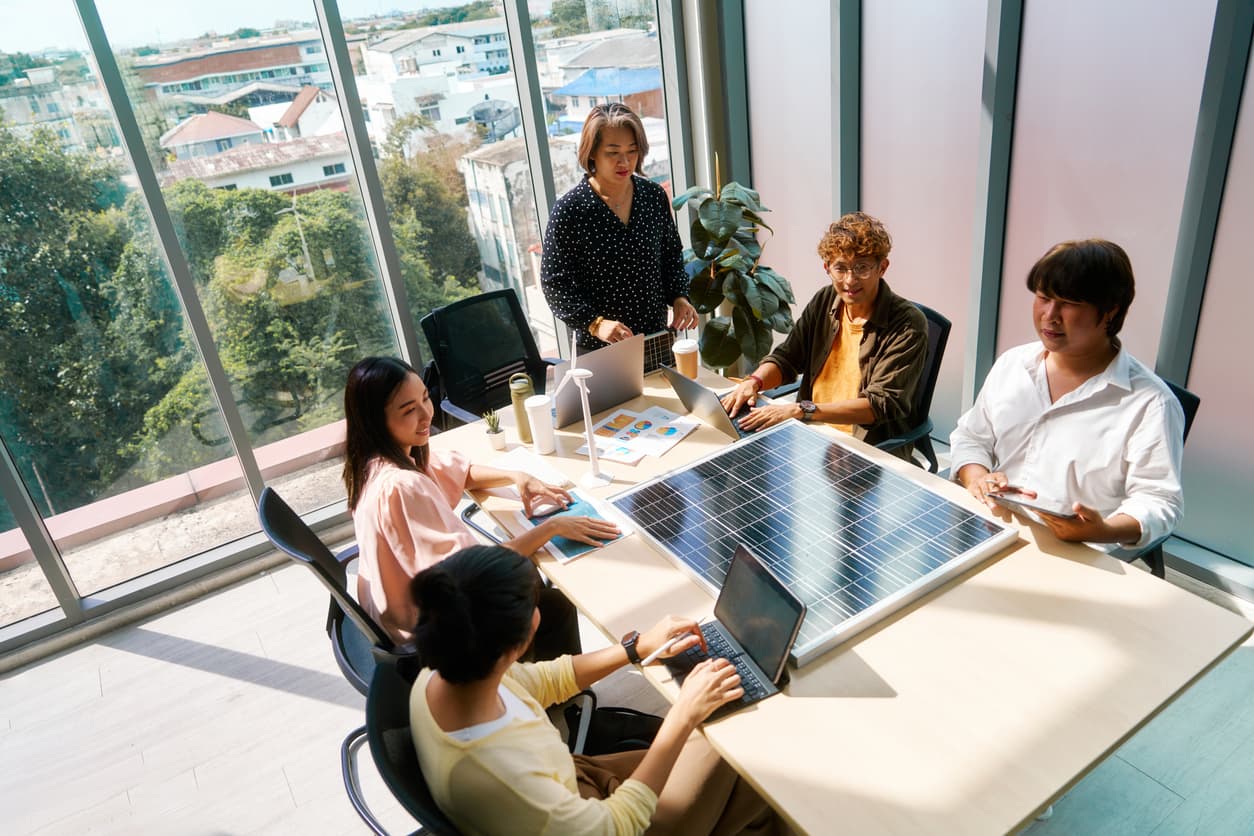
The performance of modern commercial buildings is increasingly tied to their environmental footprint and long-term operating costs. Being energy efficient means getting more usable output from every watt while minimizing waste. Companies that make these improvements often see immediate reductions in utility bills, stronger appeal among environmentally conscious partners, and easier compliance with evolving sustainability standards.
Terms to know
Understanding the core language of building performance helps inform smarter upgrades and investment decisions.
Air sealing: The practice of using materials like caulk or foam to close cracks and gaps in a building, preventing uncontrolled airflow
Building envelope: The exterior shell (walls, roof, foundation, windows, and doors) that separates indoor spaces from the outdoors and controls heat, air, and moisture transfer
Ductwork: A system of metal or flexible tubes that distributes conditioned air from the HVAC unit to various zones of a building
Energy audit: A professional assessment that identifies where and how a building uses energy, highlighting opportunities for improvement
Energy efficiency: Reducing the amount of energy required to deliver the same or better performance through smarter systems, equipment, and practices
Greenhouse gases: Gases that trap heat in the atmosphere, commonly produced as a result of energy generation for buildings
HVAC: Heating, Ventilation, and Air Conditioning, the system that regulates indoor temperature, humidity, and airflow
Indoor Air Quality (IAQ): Conditions affecting the air inside a building, including humidity, temperature, pollutants, and ventilation levels
Insulation: Materials added to walls, roofs, and floors to slow heat transfer and maintain comfortable indoor temperatures
Renewable energy technologies: Systems that generate power from natural, replenishing sources such as solar, wind, geothermal, or hydropower
Sustainability tips for small businesses
Small and medium-sized businesses can make meaningful progress toward a more sustainable office space without major renovations. Simple operational changes and modest upgrades often create noticeable savings.
- Promote employee engagement: Teach staff easy habits like turning off lights, using energy wisely, and adjusting thermostats, which can reduce consumption with no capital investment.
- Upgrade lighting: Swap out fluorescent or incandescent bulbs for LEDs, which use far less electricity and last significantly longer.
- Eliminate phantom power use: Use smart power strips to cut electricity to devices that draw power even when they’re turned off.
- Conduct simple energy audits and seal leaks: Walk through the building to look for drafty windows, doors, or utility openings. Basic weatherstripping or caulk can quickly seal up your building envelope and prevent energy loss.
Core strategies: building envelope improvements
A well-designed building envelope dramatically improves energy performance. When it fails, temperature swings and unnecessary energy use follow.
Insulation upgrades
Improving insulation in roofs, walls, and floors slows the transfer of heat across the building structure. This reduces the load on HVAC systems, stabilizes indoor temperatures, and cuts utility costs.
Window replacements
Replacing outdated or drafty windows with modern double- or triple-pane models enhances comfort and reduces reliance on artificial heating and cooling. High-performance windows also allow for better use of natural light, improving both efficiency and occupant satisfaction.
Air sealing techniques
Closing gaps and sealing infiltration points keeps conditioned air inside and outdoor air out. Using caulk, weatherstripping, and duct sealing creates a tighter, more efficient building that maintains consistent temperatures with less effort.
Core strategies: lighting upgrades
Lighting improvements are among the quickest and most cost-effective ways to lower energy use.
LED lighting installation
LED fixtures use dramatically less electricity than older lighting technologies and last much longer. This switch reduces energy bills and cuts the time and money spent replacing bulbs.
Motion sensors and smart lighting controls
Sensors that dim the lights when a space is empty ensure that lighting is used only when needed. These controls eliminate unnecessary energy consumption throughout the workday.
Daylight harvesting strategies
Designing spaces to capture natural light through windows, skylights, or light shelves reduces dependence on electric lighting. Beyond saving energy, increased daylight can improve productivity and overall well-being for building occupants.
Core strategies: HVAC system optimization
HVAC systems are often the largest energy users in a commercial building. Optimizing them yields significant returns both environmentally and economically.
Regular maintenance and tuning
Routine filter changes, duct inspections, lubrication, and system calibration keep HVAC equipment running efficiently. These preventative steps help avoid wasted energy and reduce the risk of costly breakdowns.
Upgrading to energy-efficient HVAC equipment
Modern HVAC technologies, such as high-efficiency heat pumps, upgraded boilers, and variable-speed air handlers, use less energy while maintaining consistent comfort. Investing in these systems pays off over time through lower utility costs and improved reliability.
Implementing zoning and scheduling
Zoning allows different areas of a building to maintain independent temperature settings, while scheduling adjusts system use during off-hours. Together, these controls ensure that heating and cooling occur only where and when office space is being used, reducing energy waste.
Challenges and considerations
Implementing efficiency upgrades comes with a few obstacles that require thoughtful planning.
- High upfront costs: Major retrofits can be expensive, even if they deliver strong long-term savings.
- Lack of awareness: Without a clear understanding of the benefits, building owners and tenants may hesitate to adopt efficiency strategies.
- Behavior change: Even the best technologies fall short if occupants don’t adjust their habits.
- Technical complexity: Older buildings may face structural or compatibility challenges when integrating new systems.
Comprehensive audits, strategic planning, and financial incentives such as grants or tax credits can help overcome these barriers and make upgrades more accessible.
Additional resources
- Saving Energy in Small and Medium-Sized Office Buildings
- About the 2022 Federal Building Performance Standard
- Building Energy Security and Efficiency
- Sustainable Solutions for the Modern Office
- Guiding Stakeholders to Improve Indoor Air Quality
- Maximizing Energy Savings for Small Businesses
- Action Guide for Managing Energy in Commercial Buildings
- Sustainable Office Guide: What Workers Can Do
- What Owners Should Know About Green Building Rating Systems
- What Is Retrofitting, and Why Is it Key to Climate Action?
- Room Booking for Efficient Use of Office Space
- The Evolution of Energy Efficiency in Facility Management
- Sustainable Commercial Building Guide
- Tips for Making Our Workplaces Sustainable
- User-Friendly Desk Booking for Office Spaces
- Understanding Energy Efficient Office Buildings
- Green Architecture: Moving Toward a Cleaner Future
- How to Use Office Space More Efficiently
- Green Office Space Certification Checklist