Behind the lens: What an architectural photographer sees inside today’s workplaces
By Rachael Roth• 8 mins read•April 27, 2026
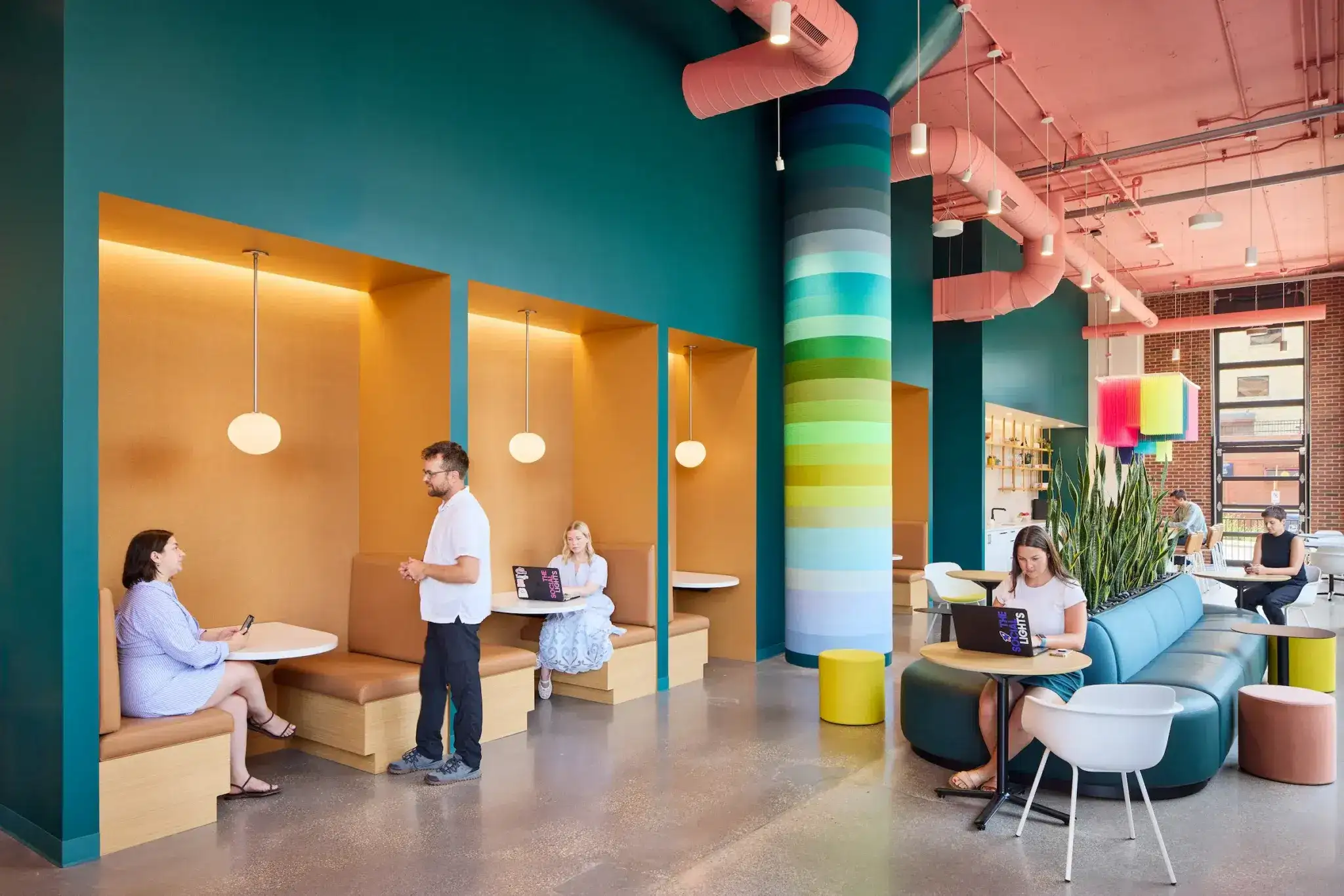
All photos by Gaffer Photography
If you want to know what’s really going on inside today’s offices, ask someone who spends his days documenting them.
Corey Gaffer is an architectural photographer based in Minneapolis, Minnesota, and has been capturing facilities all over the world, including the Long Museum West Bund in Shanghai and the offices of the San Francisco Chronicle, for the past decade and a half.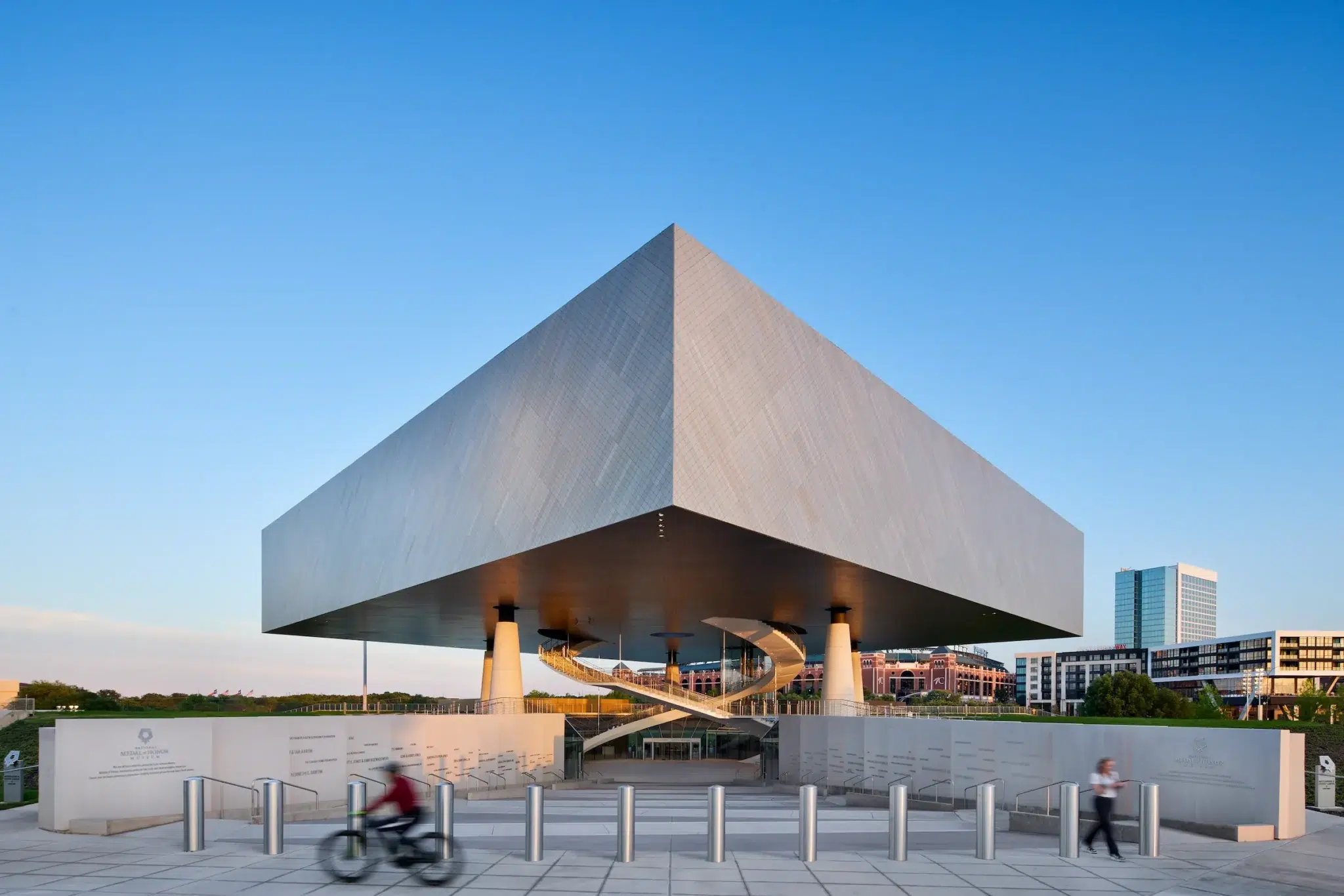
National Medal of Honor Museum in Arlington, TX
Gaffer offers a unique perspective on the built environment and how it’s changed over the years. His introduction to architectural photography was working as an apprentice for Hedrich Blessing, a Chicago firm founded in 1929, back when it would take multiple photographers up to two days to produce just a few images of an office.
The firm’s roster of photographers is behind the images of Chicago’s most influential buildings, including those by Ludwig Mies van der Rohe and Frank Lloyd Wright. Gaffer worked under the leadership of renowned photographer Nick Merrick, who, alongside Art Gensler, developed the blueprint for modern architectural photography.
Though Gaffer’s work involves more modern technology than his predecessors, photographing workplaces and facilities can still span days. He works closely with architects to understand their vision, carefully adjusts every element from lighting to furniture, and observes how employees and tenants interact with and move through each space. 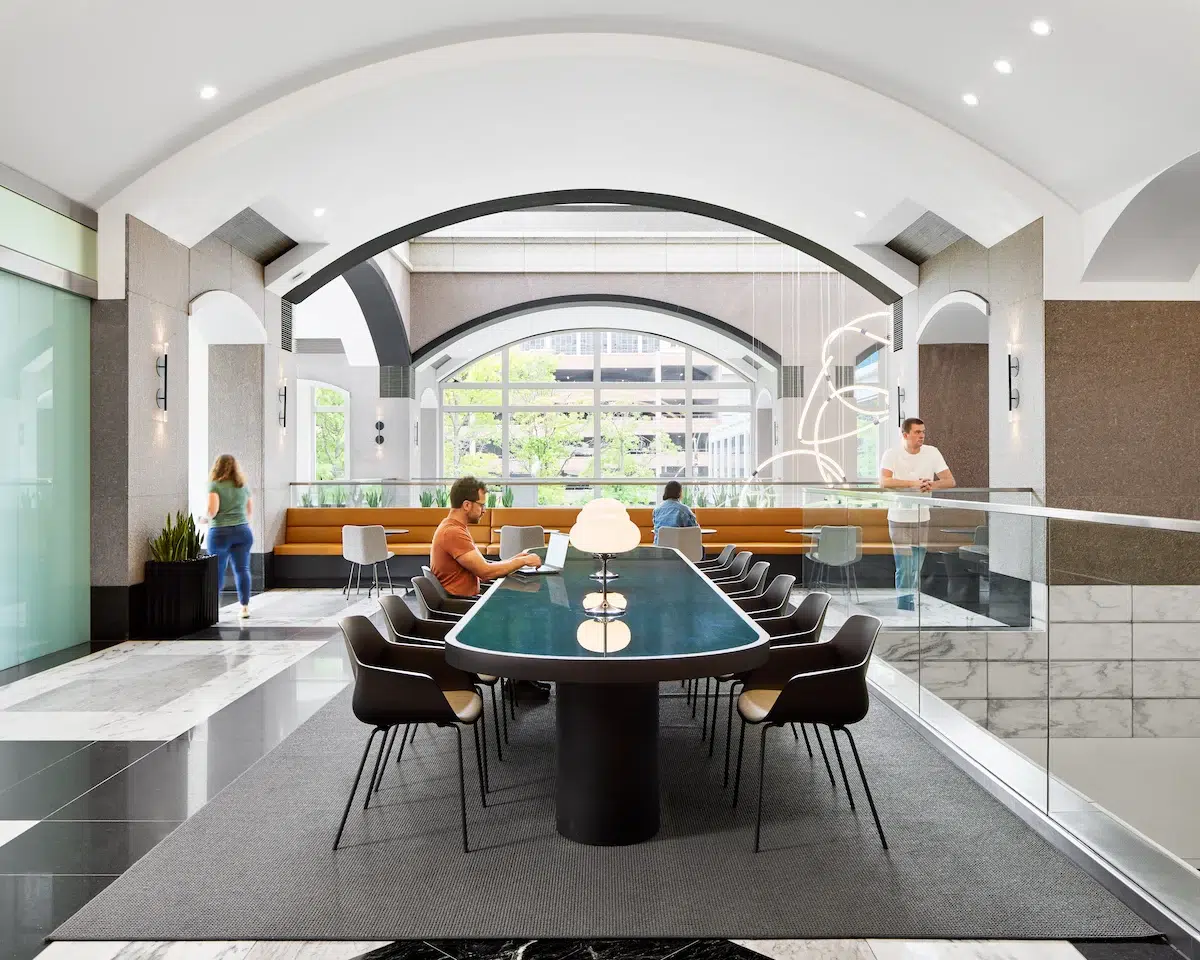
SPS Tower in downtown Minneapolis
In our Q&A, Gaffer shares his process behind the scenes and the real estate trends shaping his work: the rise of renovations, the importance of showcasing humans in an office, the impact of technology, and the joy of happenstance.
On collaborating with architects
OfficeSpace Software: How do you bring the architect’s vision to life through your photos?
Corey Gaffer: You want to craft a full story behind these spaces. That involves collaboration with the architect to understand that story. Before any shoot, we usually Zoom or have a phone call to chat about the project and understand what’s important to the architect. Do they view the space as bright, or dark and moody?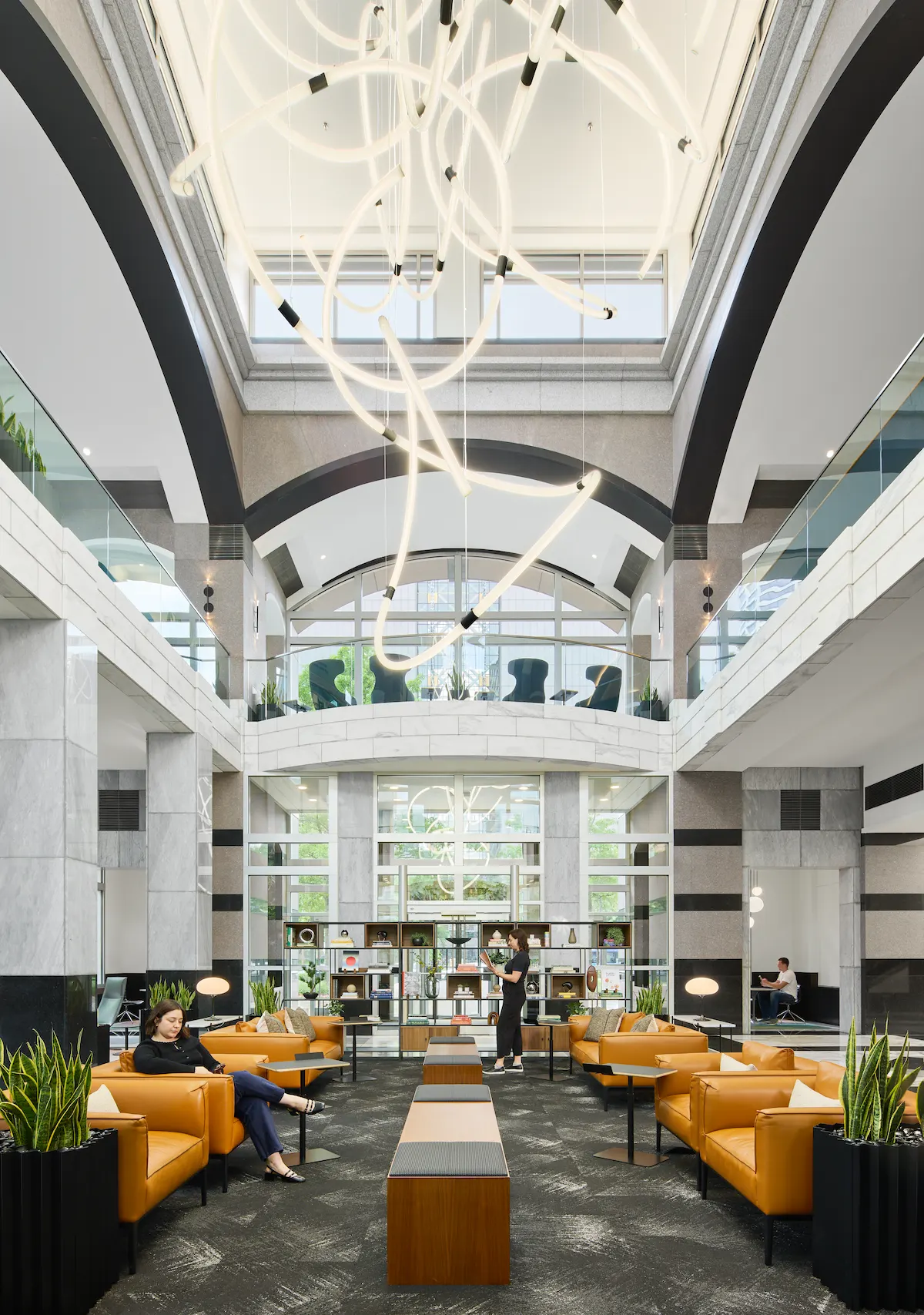
The landmark SPS Tower, a mix-used space in downtown Minneapolis
Then, when you’re on site, you get a sense of who’s using this space and how. If we can, we love featuring real employees or real tenants, which results in better images. If clients are trying to lease a newly renovated space, they want every image to have a person in it. Especially after COVID, which introduced a fear of spaces looking empty, it’s important to show the building in use.
OSS: What’s your experience entering offices as a photographer and interacting with tenants?
CG: Offices are often quiet places. A camera can throw off a vibe. People get a little nervous, or run away. Getting naturalness out of an office space can be tough.
At the same time, we get to spend two or three days with the company and architects and have these really intimate experiences. We get to have conversations with people from all walks of life that you wouldn’t normally have in passing. The work is a great human connector, which is the whole point of an office space, right? 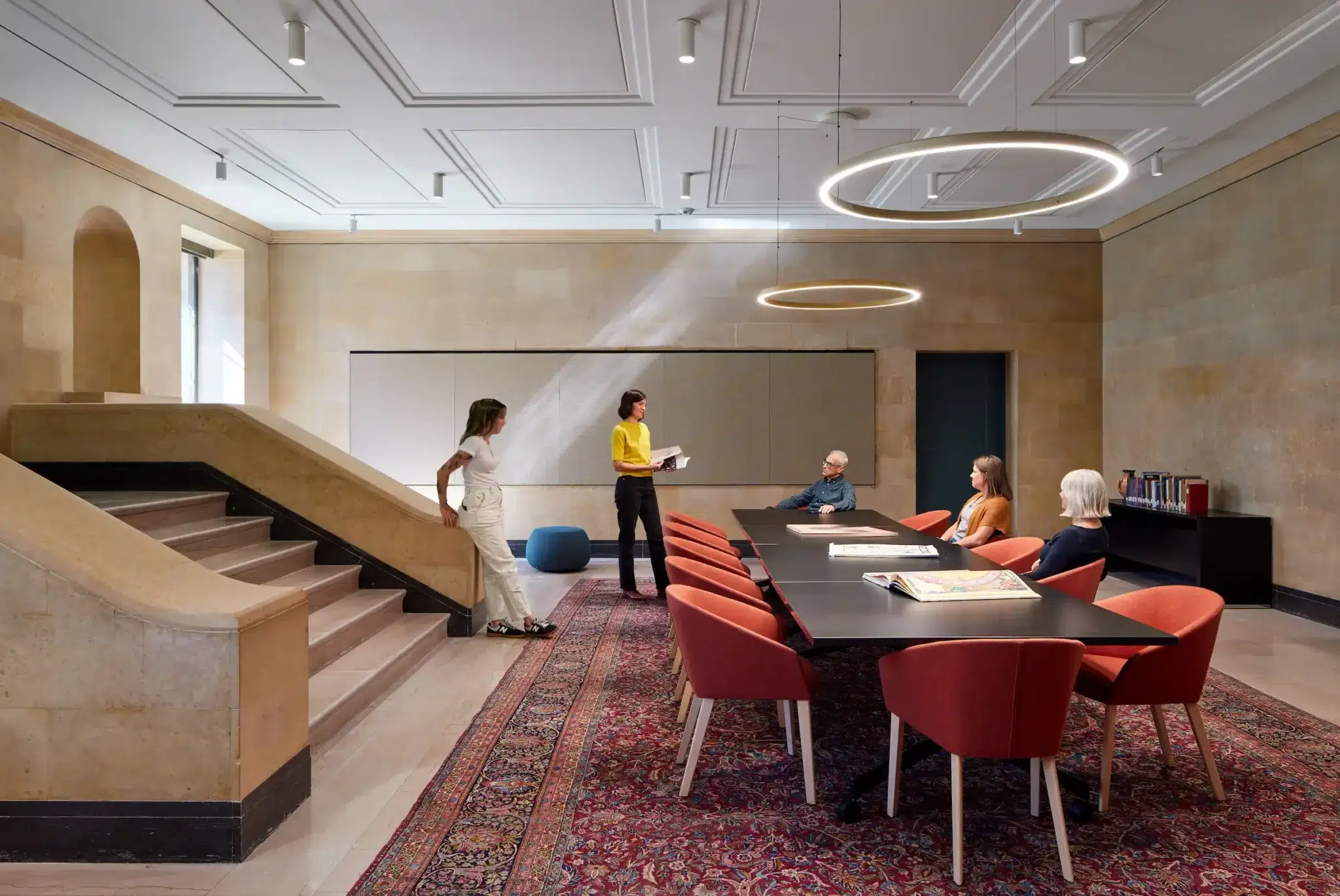
Staff area at the Joslyn Art Museum in Omaha, Nebraska
The art of revitalized spaces
OSS: How have recent real estate trends impacted your work?
CG: A lot of the work any architecture photographer is doing today is photographing renovated or repurposed buildings. There’s new building work, but a higher and higher percentage every year is renovation work.
Designers are thinking about longevity and sustainability, and how to design a building that can be repurposed or have a longer lifespan. The buildings that are timeless are these mid-century, Mies van der Rohe buildings with floor to ceiling glass. There was a lot of thought put into those designs that seems to carry over even when a building is repurposed. The interior space is simplistic and lends itself to serving multiple purposes.
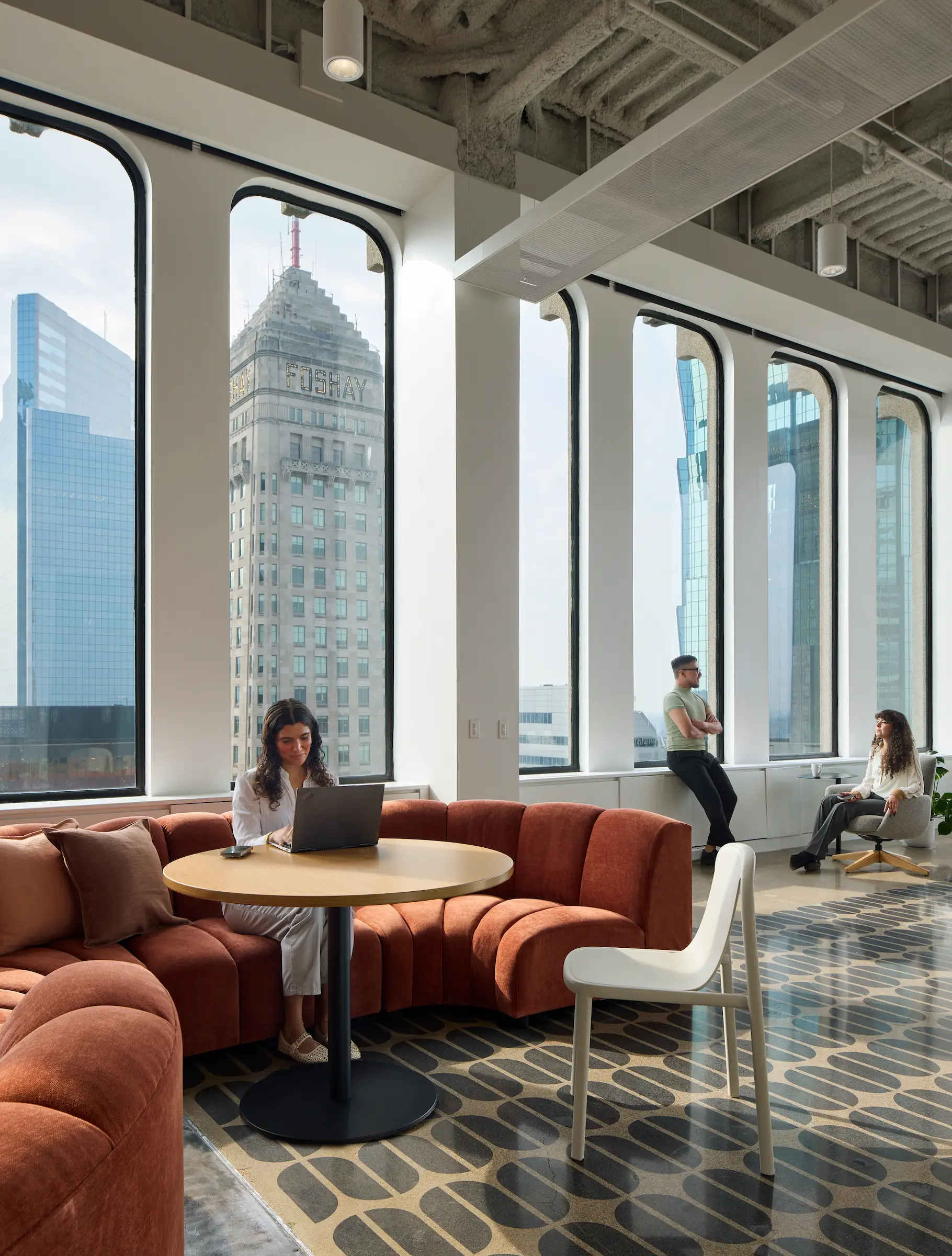
Meyer Borgman Johnson office in designed by Perkins&Will in Minneapolis.
OSS: What are some stand-out renovation projects you’ve photographed?
CG: One of the coolest repurposed buildings we photographed is Mill 19 in Pittsburgh, a former steel mill that’s now the headquarters for Carnegie Mellon University’s Manufacturing Futures Institute, and its affiliate, Advanced Robotics for Manufacturing (ARM). They retained the external structure of the quarter-mile-long steel plant and outfitted it with the country’s largest sloped roof solar installation.
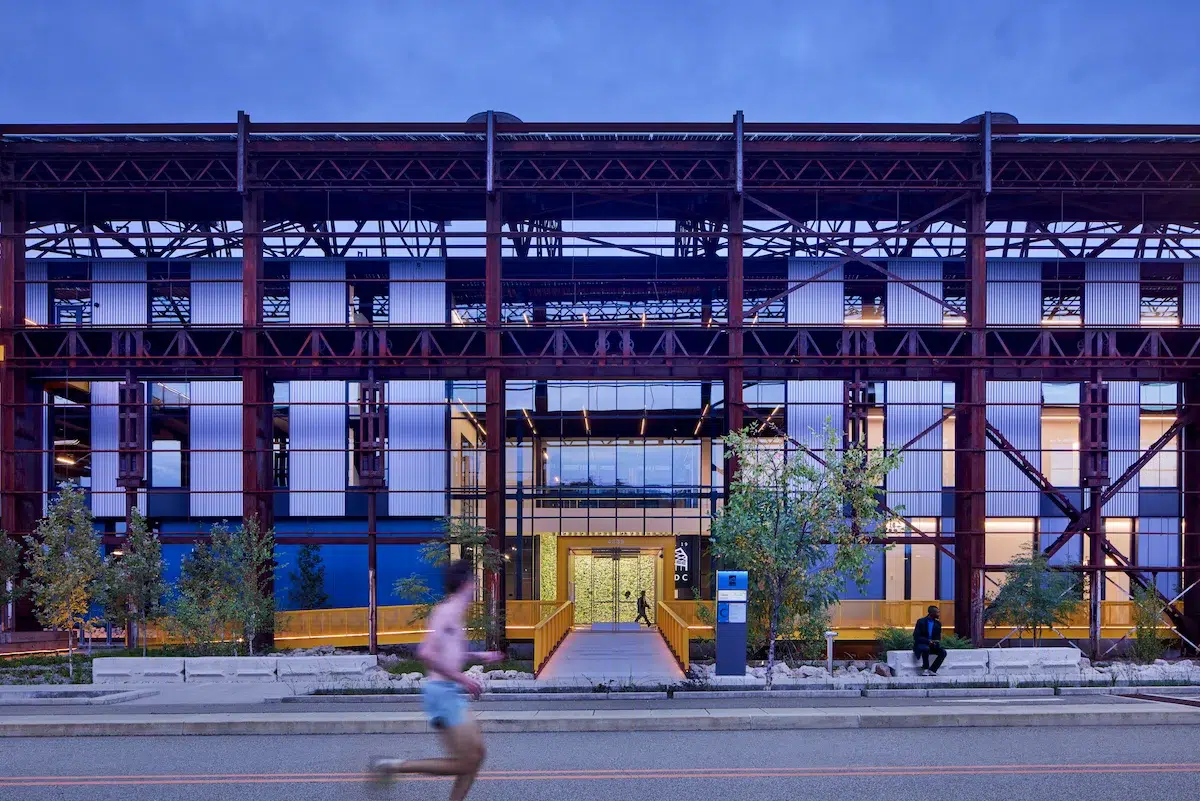
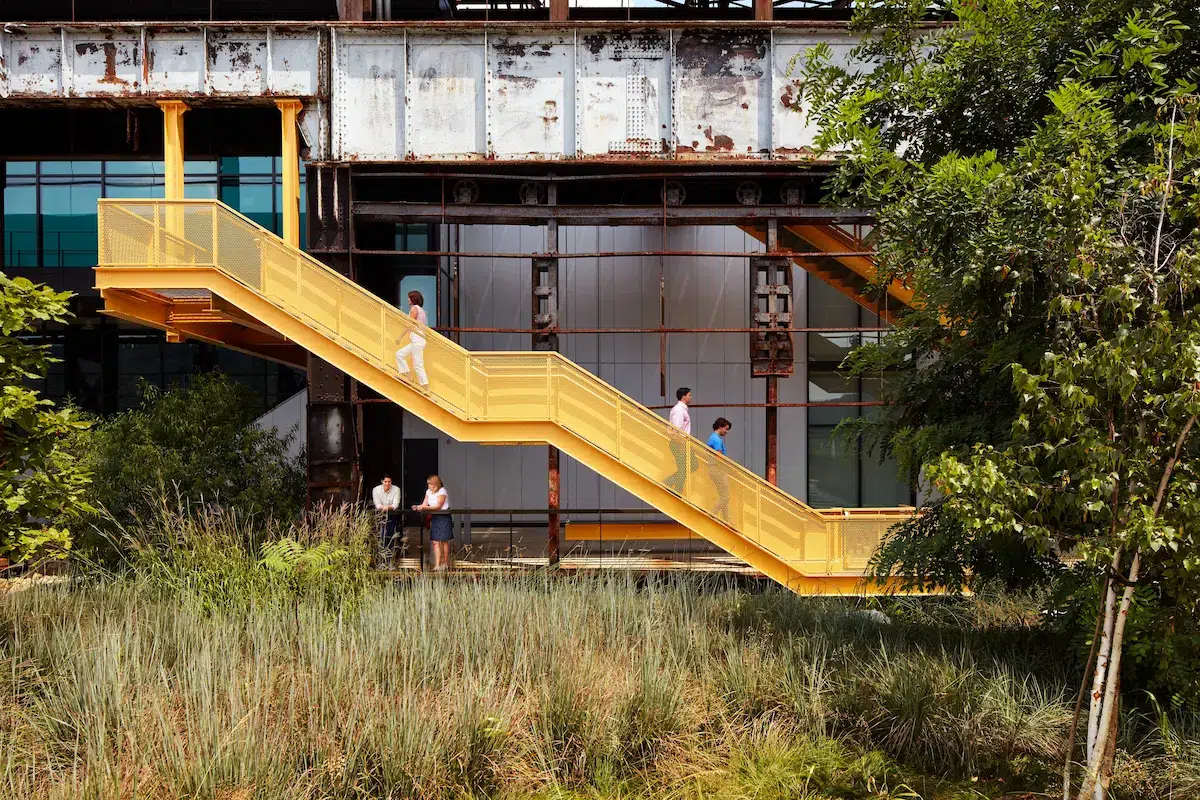
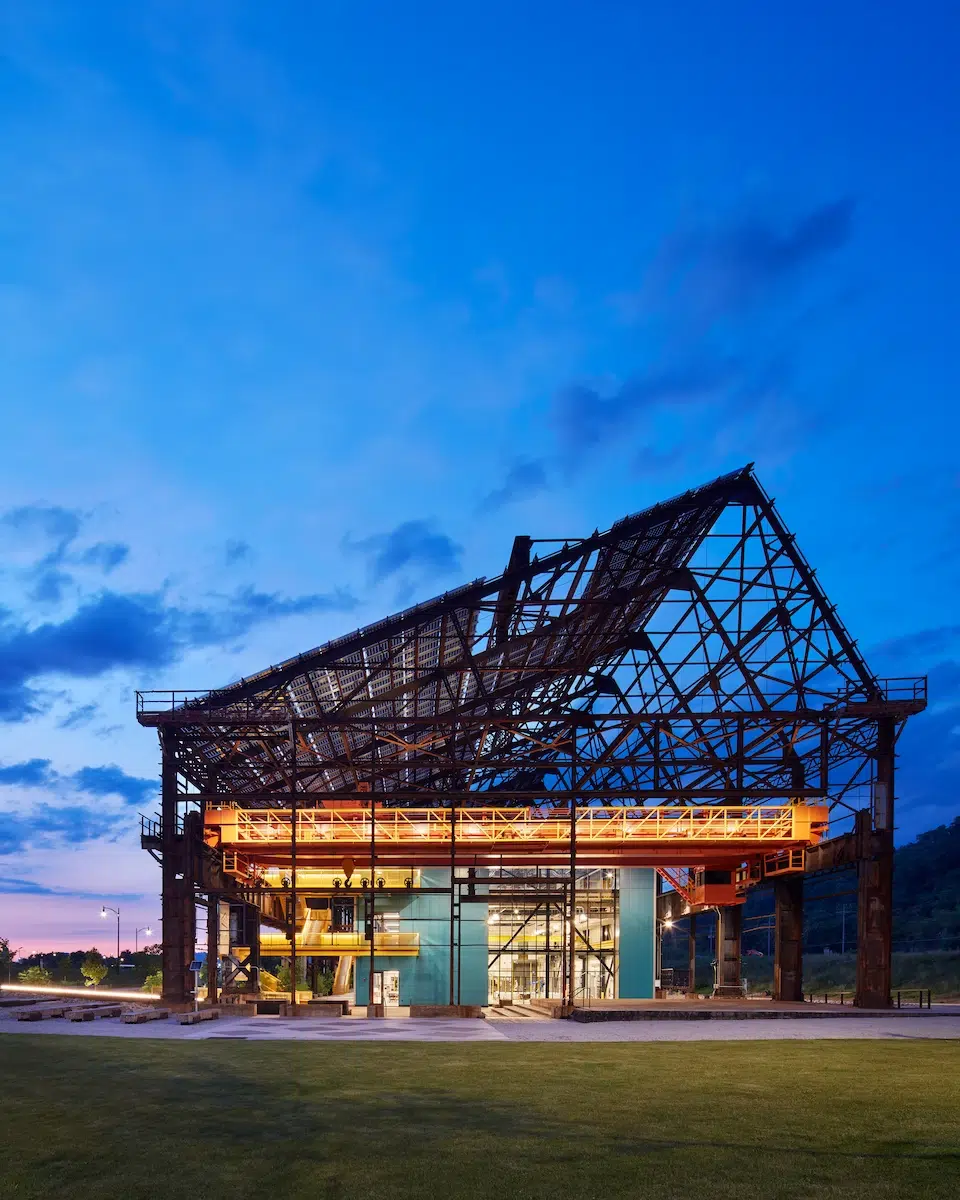
The RIDC Mill 19 Building
We also recently photographed the headquarters of a major manufacturing company, which is in a famous Eero Saarinen-designed building [built in the 1960s]. They needed to upgrade the space to accommodate modern ways of working, and added private breakout rooms where teams can collaborate.
It’s a massive challenge for the architects to uphold the historic value of this building while upgrading it. It has beautiful aluminum grids that need to be taken down to replace the lights and heating, but they bend very easily. The insulation between floors is horsehair, which needs to be replaced. It will take a while before all seven floors are done, but it’s a really special place worth preserving. It was one of the first buildings to use Corten steel and one of Saarinen’s masterpieces.
Bringing truth to light through images
OSS: How has technology, both in photography and in offices, changed your approach to photographing a space?
CG: When the Hedrich Blessing firm was founded, retouching photos was a major production. There were a lot of people in the dark room doing this work, bleaching the film negatives to remove an outlet and painting back in the pigment. They were doing the same retouching we do today in Photoshop, but on film.
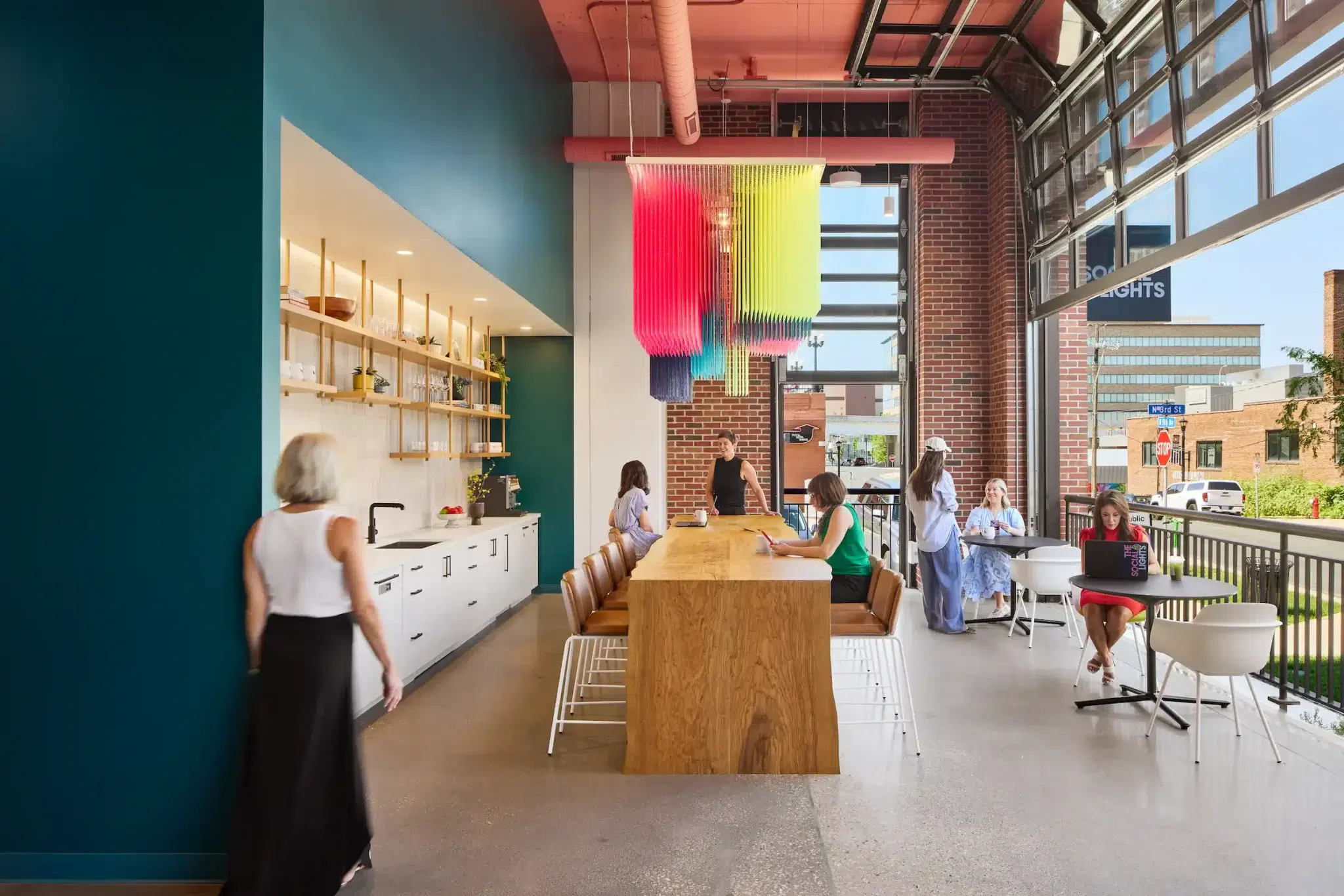
Studio BV’s The Social Lights office in Minneapolis
As a photographer, I believe you need to have some sort of truth within the work you put out there. These are real, documented spaces. Having a heavy hand in retouching and using Photoshop to alter the space outside of what’s really there needs to be questioned. Especially with AI, you can modify spaces really easily.
So, the truth behind these spaces has become more important to clients, and we agree on parameters for what should be left in, like sound control devices, or sensors hanging from the ceiling; real items that are found in the space.
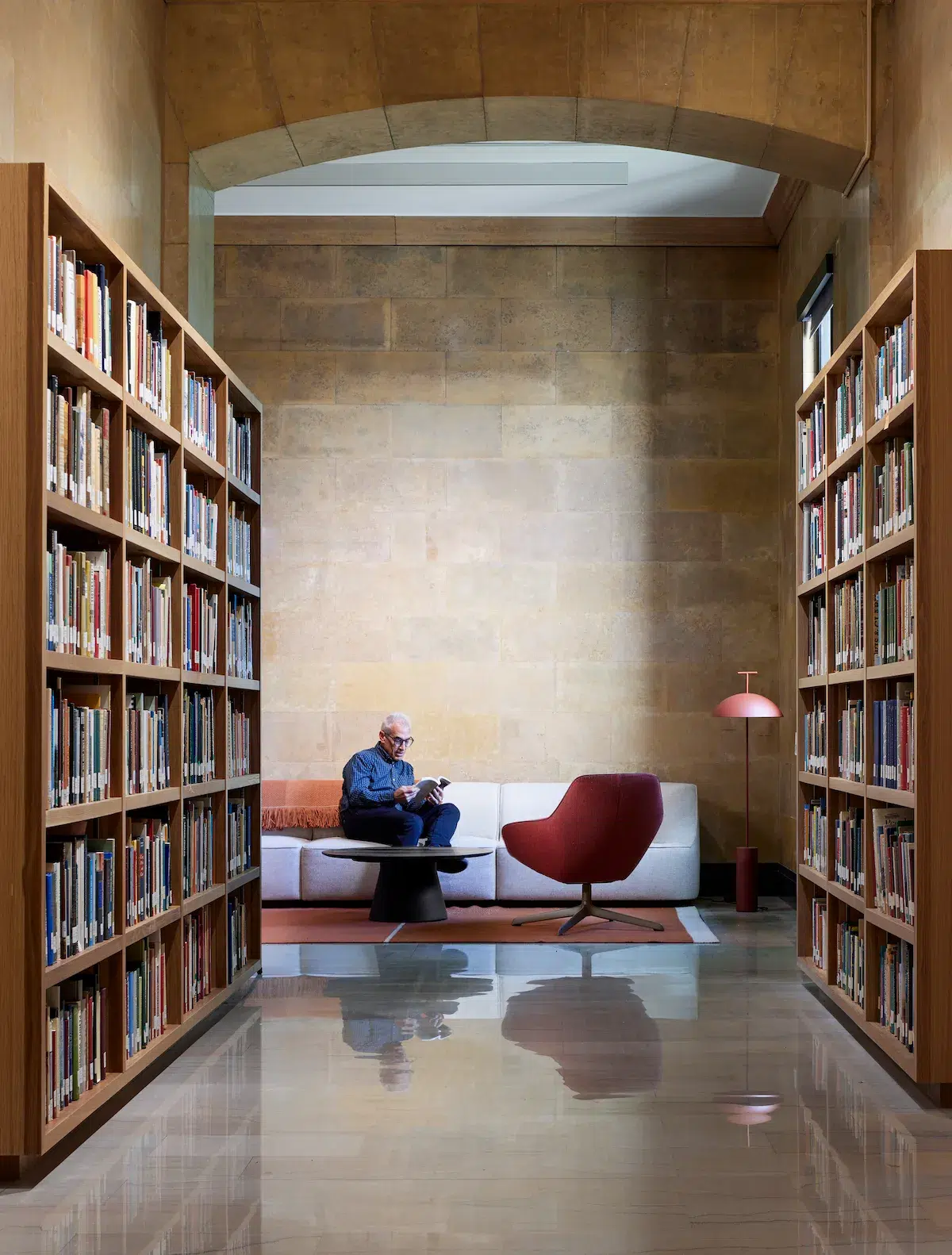
Staff area at the Joslyn Art Museum in Omaha, Nebraska
Everyone wants a pickleball court
OSS: What are some major trends you’re seeing in the workplaces you photograph today?
CG: There was a period after COVID when you’d walk into an office and no one would be there; everyone would be in the coffee shop downstairs. So, many companies have started to add café spaces within their offices that blend with smaller breakout rooms or open conference tables, which seem to work really well. You see collaboration start to happen naturally.
But there’s been a shift in the opposite direction, too, depending on the culture of the company. We’ve seen more single, closed office spaces, particularly at law firms, because they offer a higher level of privacy.
At one point, every office had open seating, but now it’s more of a blend between the two, especially with more flexible work schedules or three-day work weeks.
Also, adding in amenities is huge right now. Everyone’s trying to add a pickleball court to their office.
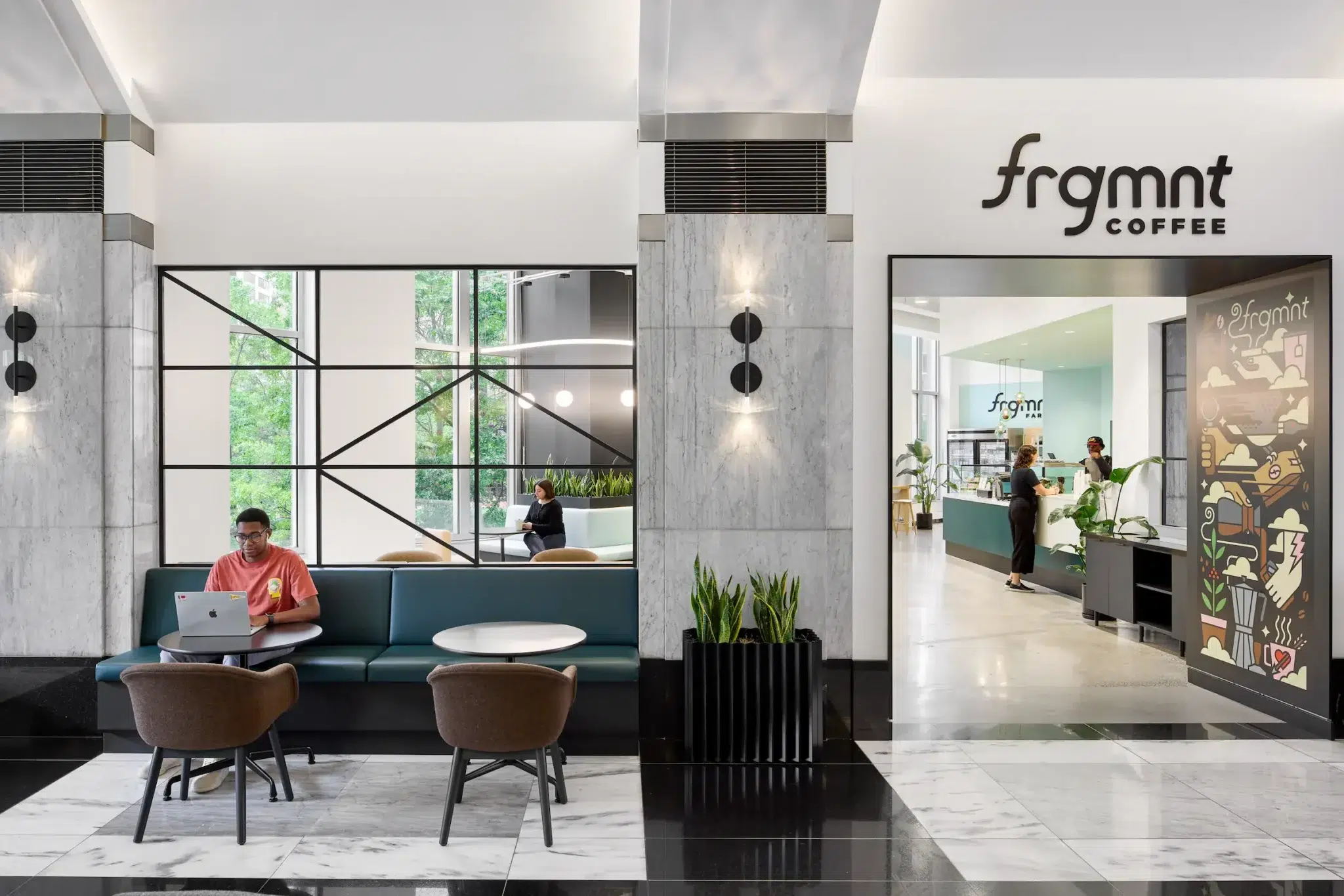
Frgmnt Coffee at SPS Tower, Minneapolis
How workplace design varies by region
OSS: Your work brings you all over the country. How do workplaces vary by region?
CG: Here in Minneapolis, or in Chicago, spaces are more open. Views and daylight are important, and there’s a focus on collaboration. If you go to South Dakota, most offices have bigger cubicles, which are closed off.
For example, we recently photographed a healthcare center in Sioux Falls. They have simulation spaces to test and modify new technologies before they bring it into the hospital, and virtual reality rooms where students, clinicians, and nurses can train and offer virtual care to patients limited by mobility or location. It’s very cutting edge. By contrast, the office spaces themselves are all tall cubicles in closed-in private spaces. That feels like a direct reflection of that region.
It’s fun to travel around and see which regions are developing and which cities are booming. Office space has gotten smaller and smaller overall, though. Every city we’ve gone to has a lot of square footage that’s open for lease. 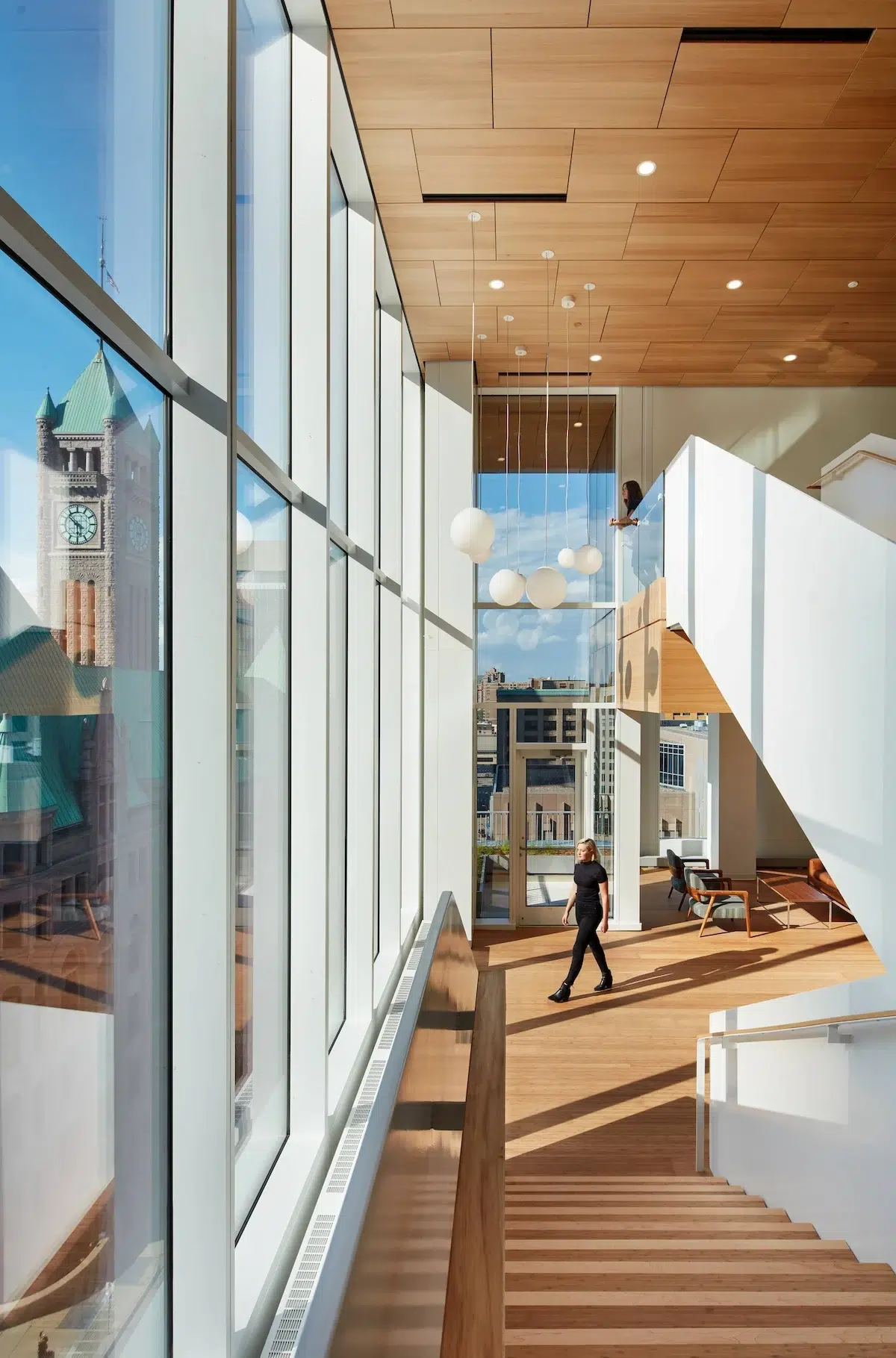
Minneapolis Public Service building
OSS: In your experience, how have architects and building owners dealt with all of that empty space?
CG: Building owners of high-rises with a lot of square footage are renovating the smaller spec suites [pre-built, move-in ready spaces], then creating communal spaces for everybody to use on the empty floors in the middle of the tower that would be tough to lease.
Also, leasing agents are putting in a lot of extra work to retain tenants. We worked with a client where part of the tenants’ lease included an event every few months, like a party with food trucks or an invitation to the opening of a new restaurant downstairs, all organized by the leasing agent.
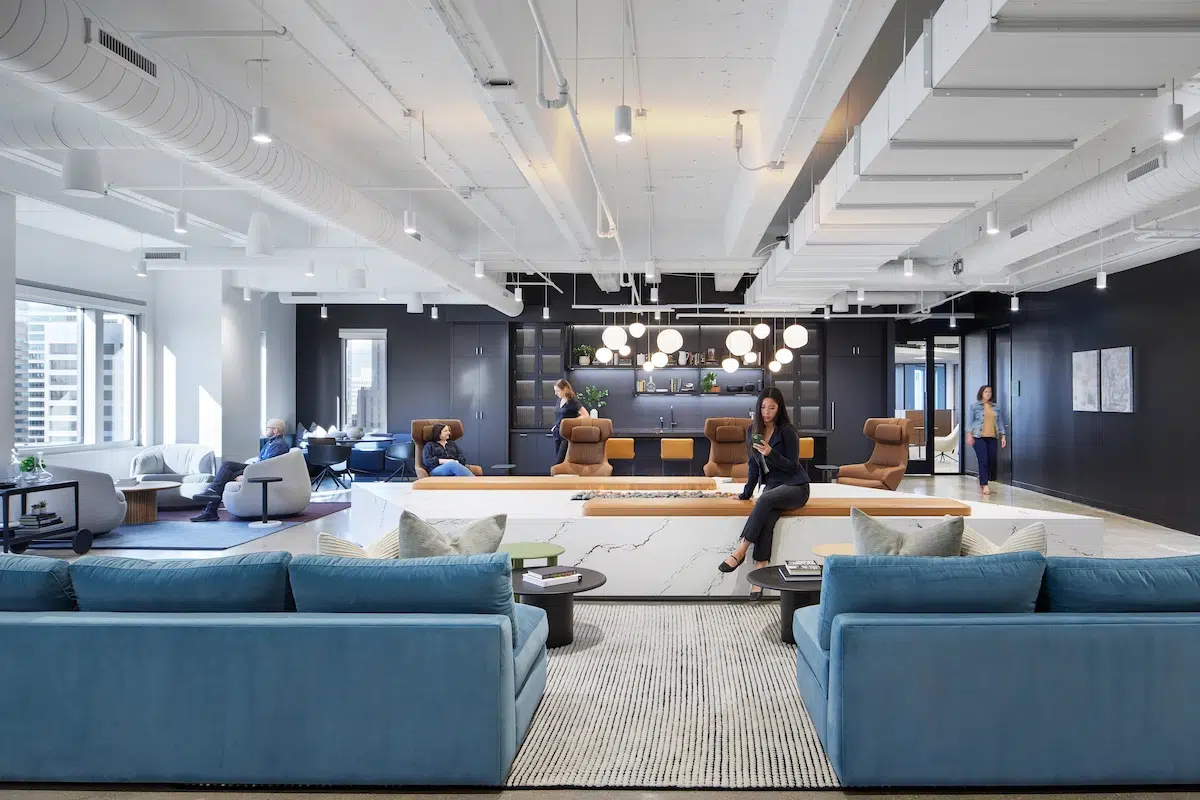
SPS Tower, Minneapolis
The best facilities to photograph
OSS: What types of facilities do you enjoy photographing most?
CG: Photographing a library is always so much fun. There are kids running around, and you can capture natural human expressions. In a museum, where people are looking at a piece of artwork, you usually see really cool human interactions and reactions.
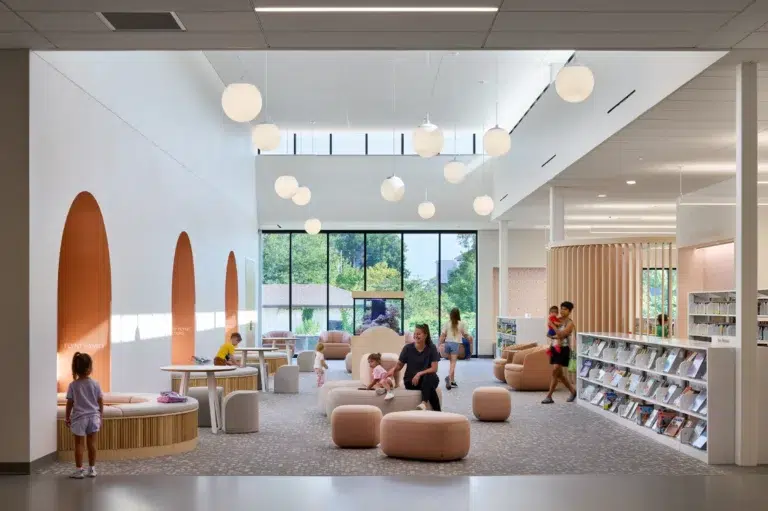
Capturing the unexpected
OSS: You spend a lot of time and effort planning a shoot. What are some moments in recent memory you couldn’t have planned for?
CG: As a photographer, you spend all this time perfecting a space: you touch every piece of furniture, bend every leaf, dust everything off, and set the lights to make it all perfect. Then, something can happen, like a beautiful streak of light coming in, or a dog walking through the photo. Something you can’t predict can be a great moment for a photograph.
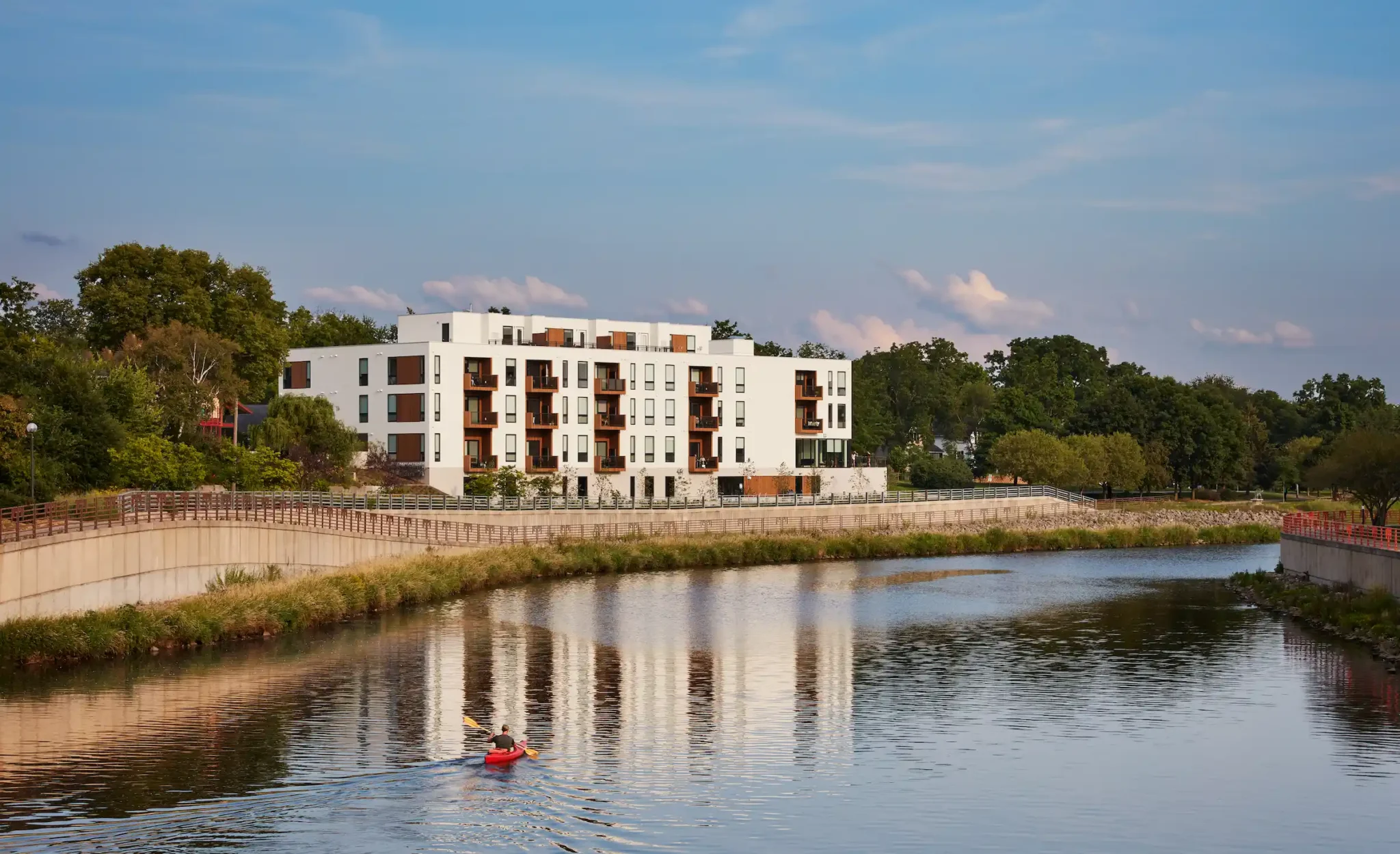
The Zumbro River along the Lofts at Mayo Park, Rochester, MN
There’s one shot we did for a client of a residential four-story tower on a river. Nobody ever kayaks on this river, and all of a sudden, the light was perfect, and this kayaker came by in a red jacket. It was the most perfect moment. We just started running to catch up to the kayaker. The scene was good in itself, but having the human scale really helped make the whole photograph. Those moments are the joy of it all.
See more of Corey’s projects on Instagram @gafferphoto and at gafferphotography.com

Get exclusive insights on workplace trends
Continue reading

Room reservation system made easy: 7 expert tips for boosting hybrid collaboration

Restacking the workplace for a workforce transformation